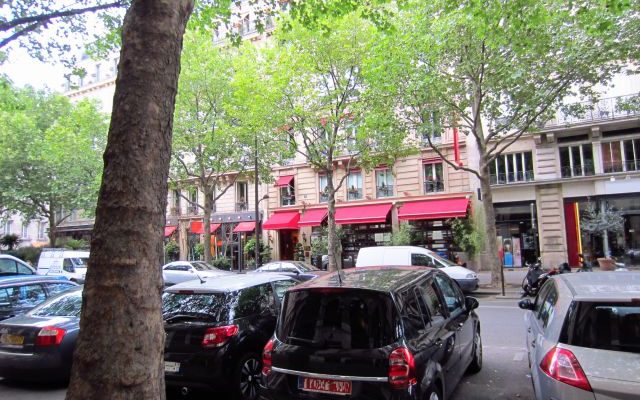
Historical attractions in Gotham City: A gin-soaked stroll through New York City’s Manhattan Island

Midtown Manhattan, New York City

To view more photos or order prints from New York City, click here

For nearly eight years, I lived only an hour’s train ride to New York City. Yet I seldom visited there, and developed a true love/hate relationship with the place. The names associated with the place now don’t ring with the same sweet tones as the ones that came before them. There are no Gershwins, Cohens, Mailers – Dorothy Parker isn’t spilling her wit all over and under the tables of the Algonquin Hotel – even Woody Allen is increasingly abandoning the place for new inspiration.

There’s no doubt in my mind that New York is the most egotistical town in the world. Whereas Paris might consider itself the center of the art world, Milan might consider itself the center of the fashion world, New York skips the modifier and is the only city I know that calls itself the center of the world. Come to think of it, New York would try to lay claims to both those titles as well.

About a year or so ago I read a fascinating book, The Island At the Center of the World, by Russell Shorto on the founding of the Dutch colony of New Amsterdam, and how it shaped the history of what would eventually become known as New York. It turns out that American qualities such as religious freedom and tolerance of ethnic groups other than your own got their start in this country in the original Dutch colony. As well as more tawdry aspects of society such as getting loaded on strong drink and falling into the company of women of ill-repute. While their English brethren at the time living north in Massachusetts were practicing a strict, puritan form of government, the Dutch colony was allowing people to live according to their conscience, or lack thereof, and a fairly lax set of laws.

Keep this in mind the next time Christmas rolls around and people are harping about how Christmas is losing its importance and how the pilgrims who came to this country to worship as they saw fit would be appalled. Those same Christians did not tolerate any deviance from their laws, and the celebration of Christmas was outright banned. That we celebrate Christmas in this country today is a relic of the Dutch colony, whose concept of religious tolerance lives on. This is doubly curious when you consider that Holland was the country the pilgrims sailed from in order to found a new nation based on religious freedom. In other words, that Christmas exists in this country today is because of that heathen bastion now known as New York City.

Anyway, this article isn’t about religious freedom and tolerance, it’s about New York City, and where to see the history of the place, as well as historical attractions there today. It’s not as easy as you think. The original Dutch colony is almost completely gone. In fact, there are more signs of the Viking period in Dublin than there are of the Dutch in New York. When the Dutch occupied Manhattan, there were over 21 fresh water ponds and 66 miles of streams. There was a sandy beach at the southern tip of the island, and the landscape was one of gently rolling hills. The growth of Manhattan has obliterated the very landscape that the Dutch settlers found. There are the occasional discoveries of a piece of road, the foundation of a house or well, and nearly all of it is then covered over with new construction. The best place to see New Netherlands is by looking at a map, where the street layout of lower Manhattan is much the same.

The colonial period doesn’t fare much better. Even the balcony where George Washington was sworn in as our first president, outside the building where the Bill of Rights was enacted, is now remembered by a single stone tucked away in a museum. In New York, history usually plays second fiddle to real estate values.

Walking the streets of Manhattan today isn’t much different than walking the streets of any major city. You have the same chain stores – the high costs of doing business there has pushed out all but the largest retailers. There are restaurants of course, as New Yorkers increasingly define themselves by choices of eateries, few of which reflect any ethnic origins native to a particular neighborhood. The city is still a melting pot of course, but the people you see walking the streets are more than likely living elsewhere in the city or beyond, or tourists, as the cost of living has grown beyond the reach of most mere mortals.

To order prints from New York City, click here

So where do you find history in New York? Look up. Once your gaze rises above the first or second floor, the architectural history of the city comes alive. Get off the train at Penn Station and make your way to the Flatiron Building and head down Broadway for some of the best historical architecture the city has to offer. Pass the temple to one man’s retail dreams, the Woolworth Building – as intricate as a child’s dollhouse, past the looming bulk of the Municipal Building complex and wander the archetypical canyons of the financial district in lower Manhattan. Swing by Saint Mark’s Church of the Bowery, a remnant of the days when this land was owned by New Amsterdam’s last governor, Peter Stuyvesant, and the Stuyvesant-Fish house nearby which he had built as a wedding present for his daughter. Say hello to Alexander Hamilton in his final resting place outside of Trinity Church, a structure itself hoary with history. Dine at Delmonico’s which fed such figures as Mark Twain, or at Fraunces Tavern where Washington said goodbye to his officers at the end of the revolution. Or choose any of the outdoor restaurants on Stone Street which has a fairly medieval air, and get casually fed and watered before staggering your way back up the island.

Head up Fifth Avenue and see what used to be the center of the shopping world. Look up at the Empire State Building’s shorter, Art Deco sister the Chrysler Building for a peek at what skyscrapers could be when people actually gave a damn about such things as aesthetics. Stroll into the Plaza in the footstep of the stars of long ago and hold your head high as they kick your ass back out on the pavement. Stroll along Central Park West where notables still live in buildings that might as well be temples. As for Central Park itself – eh, it’s a park. It’s trees and grass and sure, it’s notable for being in the midst of one of the largest cities on earth, but in the end, it’s a park. It’s a living space for those who live here, who’ll you see in expensive recreational uniforms, or just sitting dazed knowing they’re supposed to get sun, but not entirely sure what they should do when the sunshine hits them. And of course a place for buskers to sell their wares and incredibly high priced bottles of water and soft drinks to tourists. It’s a simulation of nature, and for me, I prefer the real thing.

In short, history is still in abundance, but you have to know where to look. And you have to realize it’s not going to be coherent, nor even make sense in the modern sprawl of the city.

Perhaps New York City is best experienced in small doses. Get there in the afternoon and wander the streets into the night. Try seeing it from the top of a tour bus and avoid the lower stories altogether. See it bleary eyed from drink when emotions might be more likely to take over, and the people might seem a bit less irritating. Yes, the fabled rude New Yorker. There are certainly as many assholes per square foot in NYC as Paris. But just as I found most Parisians to be quite charming, the true New Yorker is really quite friendly as well, eager to chat or to help you find your way.
Midtown Manhattan, New York City

To view more photos or order prints from New York City, click here

So it’s late in the night, my last trip there, days before fleeing the east coast and New York for good and I had been walking the streets for hours, my pockets full of cash that was a going away present from the office where I worked, feeling like an emigrant in reverse, fleeing west from the city instead of eastward across the ocean. I always felt like an emigrant here, fleeing my home and poverty for a chance at a better life in the promised land. I was looking to say goodbye to the Chrysler Building when a man came stumbling onto the sidewalk in front of me, mussed-up hair and dressed in his P.J.’s, cursing each step he took, as though he was sent out by a shrew wife on some trivial errand. And yet when stopped by some tourists who had lost their way, he was as friendly and courteous as anyone I’ve met anyplace. I dined in the building which inspired Edgar Allan Poe’s The Cask of Amontillado, and spent more on it than I would a week’s worth of groceries. A black man outside of Penn Station bummed a cigarette from me and in exchange we walked down Broadway and smoked his marijuana. Waiting for the train I fell in with a group of strangers, ranging in age from 21 to 71 in a small bar and drank toast after toast, as I prepared to leave a place I could never feel a part of, but would certainly never forget. I lived in the shadow of that city for almost eight years, and never felt a part of it. But for a few hours, I was a New Yorker. I missed that train and the next, and as the little group who met as strangers and parted as friends drifted apart and I found myself slouched in a seat on the Long Island Railroad, an old song by the Pogues drifting through my fractured mind …

In Manhattan’s desert twilight
In the death of afternoon
We stepped hand in hand on Broadway
Like the first man on the moon

And “The Blackbird” broke the silence
As you whistled it so sweet
And in Brendan Behan’s footsteps
I danced up and down the street

Then we said goodnight to Broadway
Giving it our best regards
Tipped our hats to Mister Cohan
Dear old Times Square’s favorite bard

Then we raised a glass to JFK
And a dozen more besides
When I got back to my empty room
I suppose I must have cried

Lyrics from Thousands are Sailing, by Philip Chevron, recorded by the Pogues.
Listen

Posted in New York City Tagged "fine art prints", art prints, early american history, historical attractions, NYCGallery, travel photographer |

Historical Attractions: A stroll through time in the downtown preservation district in Evansville Indiana

Southeast Second Street, Evansville, Vanderburgh County, Indiana

To view more photos or order prints of historic attractions from Evansville, Indiana, click here

I was in Beaufort, South Carolina recently which prides itself in its old homes and architecture. And yep, it’s something to be proud of. But I couldn’t help but think that if you take away the Spanish moss, what you’re left with is heat and stunning architecture.

In short, we’ve got that at home.

Evansville, Indiana grew up on a bend of the Ohio river, and summers there rival the lowcountry for hot, muggy weather. Unknown to most people in the area, so does the architecture. Much of the city is pretty typical suburban fare, though the downtown district still retains quite a bit of early twentieth century charm. But where you can truly step back in time is in the preservation district, just off downtown, a block inland from the riverfront.

The riverfront, now growing with riverboat gambling, restaurants, bars and shops attracts tens of thousands of visitors each year, drawn to the river city’s charms. But head a few blocks over and in and you find yourself on tree-lined brick streets, full of turn of the twentieth century homes, lovingly restored. The Reitz Home Museum is the only Victorian residence museum in the state of Indiana, and gives a good idea what many of these homes must have been like in their prime. But it’s easy to get in a good hour stroll down Southeast Second, First and Riverside Drive, past carriage houses, painted ladies, Italianate and Greek revival, elegant brick structures, many with hitching posts still out front, and widow’s walks on the top floors which once gave panoramic views of the river.

Weekday mornings and afternoons are the best times for touring the district, before the cars of those renting apartments in these grand old houses get home and line the streets. Nightime is magic as well, when silence descends on the streets and the smells of these older structures waft out to greet you on the sidewalks.

Time traveling in the midwest is a subtle art, and here you can find it at its finest. Non-commercial, very little in the way of formal historic attractions, instead you find yourself walking through a residential neighborhood, still alive and much as it must have been a hundred years ago. When the light’s just right, when the scent of the flowers is rich in the thick, midwestern air, it’s easy to be transported back. And hard to convince yourself to leave.

Note: I found a great site with info on Evansville history, which helped me put names and dates to these homes. Check it out!

Posted in Ohio River Valley Tagged "fine art prints", early american homes, Evansville Preservation District, historical attractions, rivercity, travel photographer |

A Contrarian’s View of History: The Myth of Independence

2010 Spirit of Vincennes Rendezvous, Knox County, Vincennes, Indiana

To view larger or order prints from the 2010 Spirit of Vincennes Rendezvous, click here

Who do we thank for our independence? Surely not the British for granting us self-rule under duress. Taxation without representation? We paid among the lowest taxes in the British empire, despite the disproportionately high costs of defending our safety. Jefferson, Addams, Franklin and the rest who signed the declaration? Curious that in this day of tea parties and general unrest that we would honor a group of men who in essence declared a war without giving representation to the people they were dragging into it (Had the actions of the Continental Congress – a cherry-picked group of mostly well-heeled, politically connected members of the wealthier classes – been under the scrutiny of the 24 hour news cycle, we surely never would have declared our independence). The soldiers? A ragtag group of citizen soldiers, described by the greatest military power of its day as terrorists (and in many cases, rightly so). An army which generally had its butt kicked up and down the east coast of this continent, which only managed to stay afloat by retreat and avoiding the fight. How about the French, a country which we in this country quite often regard as cowards, but let’s face it, handed us the victory at Yorktown on a silver platter (For the record, the French lost over 2,000,000 people in both world wars, out of a population of about 40,000,000. The U.S. lost a little over half a million out of over 130,000,000. The percentage of the French population who supported the Germans in WWII was far lower than the percentage of colonists who supported the British in the revolution). We couldn’t have done it without the Frogs. The media? How about Paul Revere’s famous print of the Boston Massacre – a deliberate distortion of the facts that would have made Fox News proud. The God of our founding fathers? Take Thomas Paine – “These are the times that try men’s souls.” Believed that observation of nature, free-thinking and reason alone could prove the existence of a supreme being, without faith nor organized religion (or try these on for size … “The United States is in no sense founded upon the Christian doctrine,” – George Washington, “It does me no injury for my neighbor to say there are twenty gods or no god. It neither picks my pocket nor breaks my leg. I do not find in orthodox Christianity one redeeming feature,” Thomas Jefferson and finally honest Abe Lincoln “The Bible is not my book, and Christianity is not my religion. I could never give assent to the long, complicated statements of Christian dogma”). George Washington, the father of our country, a second-rate soldier prior to the revolution who made his fortune marrying a rich widow whom he never showed an excess of warmth and love, a slave-owner and member of the ruling elite, who derived his power from being a successful businessman. His great dream was to assume the trappings of an English gentleman

We’ve created a mythology about the founding of our nation (as all nations do), which when leaned upon heavily, collapses like a deck of cards and threatens to take us all along with it. There was no single ideal, no single truth, no single motive that we can point to and say “that’s what this country declared our independence to preserve). No single ideal is more American than any other, at least in reference to our birth.

In truth we owe a debt of gratitude to all of the above and countless others, not for what we wish they could have been, but for what they were. To understand the founding of our country, and the miracle that it truly was, requires seeing the people behind the myths. Human beings with all their faults, foibles, idealism and intelligence. They rose to the occasion and in many cases, far surpassed what would in most circumstances have been expected of them. The Declaration of Independence wasn’t signed as part of a grand, inspired by God plan for manifest destiny, nor did it grant us independence. They didn’t sign on to forge a new nation, but to protect their own states’ and private citizens’ rights first. Doubtless they knew that a new nation of sorts would be forged, but the details were to be hammered out years later, and fought about still to this day. It was a step along the way, a milestone in what we were to become. What we do with our independence – now as much as then – is still up to us.

Posted in Ohio River Valley Tagged "fine art prints", early american history, fort sackville, historical attractions, Living History, revolutionary war reenactment, revolutionary war reenactors, travel photographer |

Living history at the 2010 Spirit of Vincennes Rendezvous

2010 Spirit of Vincennes Rendezvous, Knox County, Vincennes, Indiana

To view larger or order prints from the 2010 Spirit of Vincennes Rendezvous, click here

The Spirit of Vincennes Rendezvous, held in Vincennes, Indiana, a charming town on the banks of the Wabash River full of historic attractions and living history, always feels like a homecoming.

Which it is for myself, as I spent several years living and working there. But it’s not just me. I see the same spirit in the re-enactors, the merchants – even the crowd itself. It had been about seven years since I found myself near Vincennes in May, and I was itchy for it weeks before the event. And I wasn’t disappointed. Meeting up with people I hadn’t seen in half a decade was like coming home. As was seeing the faces that travel the re-enactor’s circuit, many of which I last saw the last time I was here. Vincennes has always been a crossroad for history. And it’s a crossroads still.

Held on Memorial Day Weekend, right when the weather turns hot and muggy, the activities spill out from the historical site into the town itself.

Vincennes breathes history. From its earliest native American roots, still visible in a couple of impressive mounds on the outskirts of town (as well as some smaller ones still visible around town), to its beginnings as a French fur trapping settlement, to the American Revolution, and its later history as a river town, Vincennes has witnessed more than its share of history.

Let’s run down a partial list. Vincennes was the first capital of the Indiana Territory, had the first Catholic and Presbyterian churches in Indiana, the first newspaper in Indiana, the first masonic lodge in Indiana, first bank in Indiana, first post office and sheriff’s department in Indiana, the first European settlement in Indiana, home of president William Henry Harrison, the site that he staged his troops for the Battle of Tippecanoe, and the site of his famous meeting with the Indian leader Tecumseh. Plus the birthplace of Red Skelton, which the locals will not let you forget.

The event remembered in the Spirit of Vincennes Rendezvous is the taking of Fort Sackville in the Revolutionary War. In the winter of 1779, George Rogers Clark and his group of of Kentucky volunteers, marched through the icy Wabash River bottoms to take the British fort at Vincennes. There was a strategic advantage to holding the fort to be sure, but another important benefit to the war effort was that it became proof of success which George Washington could use to persuade the French to join the conflict.

And it gives a legion of merchants, re-enactors of living history and those who like brats and buffalo burgers, a reason to gather in the balmy midwestern heat for a couple days each year. The reenactment of the battle is of course, nothing close to authentic since the fort is long since gone, but instead more of a demonstration of military tactics of the period. Still impressive all the same. The merchants and entertainers, while not always authentic to the time period, are certainly abundant. And it’s all held more or less, on the site of Clark’s victory over the British.

George Rogers Clark National Historic Park in Vincennes is the home of one of the last classical memorials created by the United States government, built of granite and encircled by sixteen fluted Doric columns, under a dome of glass. Inside it’s just as breathtaking, with a bronze statue of Clark by Hermon Atkins MacNeil, surrounded by marble wainscoting and murals of the events of Clark at Vincennes. The view from the top of the stairs includes the cathedral and old burial ground, and the Lincoln memorial bridge crossing the Wabash.

Best of all though is the acoustics at the top of the stairs, against the walls of the memorial. At the end of the official activities on Saturday evening, when the troops have all been fed, an unadvertised treat awaits those who linger. Gradually, members of the various fife and drum corps make their way to the memorial for an impromptu jam session of sorts, where the drums ricochet off the building and the fifes swirl around on top, in a deafening cacophony of military music.

Situated adjacent to the old, downtown area of Vincennes, and a short walk from the other historic sites in town, a visitor is able to wander freely after hours, and take part in a variety of events. At the ball in the yard of William Henry Harrison’s home, Grouseland, there were at times pushing a hundred people, some in period dress, some just wandering in off the street, following the calls of dances two hundred or more years old. The various historical buildings were open for candlelit tours, and what was supposed to have ended for me at five in the afternoon, finally wrapped up with much sadness about ten.

Which I might add, was better than some of the times when I was more involved with the after hours activities. There was the year for instance, when I nearly slept on the grass, under the stars someplace in the vicinity of the encampment, with the smell of wood fires and the sound of music being played around campfires wafting in and out of my brain. As I said, it was a sort of homecoming for me as well, and my old home was staggering distance from the site. But I digress …

Mark your calendar for next year – Memorial Day weekend, Vincennes, Indiana, two days of historic attractions, roasted dinners, dancing, baking heat and usually a thunderstorm or two. Look for me on the steps of the memorial, just about sundown.

Posted in Ohio River Valley Tagged "fine art prints", early american history, fort sackville, historical attractions, Living History, revolutionary war reenactment, revolutionary war reenactors, travel photographer |

South Carolina’s Low Country: A Jimmy Buffet lifestyle meets the old South

edisto-island-photos-128

To view more photos or order prints from South Carolina’s Low Country, click here

People call it the lowcountry, or low country, and it’s made up of the coastal lands south of Charleston, South Carolina, including Beaufort, Colleton, Hampton and Jasper counties. Some include Charleston, some don’t. Some include Myrtle Beach. But all seem to agree that it’s as much a state of mind as a geographic area.

I just spent a week in the lowcountry, in a house on Edisto Beach, where I’m assured by the travel literature that I’ve had the real island living experience.

Lowcountry refers to the fact that much of the land is at sea level. In short, much of the time you’re in a swamp, or to put it euphemistically, a coastal wetland. There’s beauty in the lowlands. A subtle beauty perhaps – wild, earthy and damp. Shooting photos along side Store Creek, I found myself growing increasingly creeped out when I remembered that I was less than a hundred yards away from a tourist attraction called the Serpentarium. The point was drilled home a day or two later when I noticed a freshly squashed rattlesnake on the highway.

The first evening there we were treated to a dramatic thunderstorm, complete with torrential rains. The dunes lay between my screened-in porch and the beach, spanned by a boardwalk. Usually this is to protect the dunes. But these dunes aren’t covered with dune grass. Instead you have your own private swamp between you and the beach, and after the storm, the frogs started. Eventually I had to call someone to let them hear the chorus, which eventually got so loud we literally had to go inside to escape the sound. The next night, and all subsequent nights they were gone.

I’m not a beach person. I prefer my beaches strewn with stones and boulders rather than sand. But I can adapt to warm water. Don’t get me wrong, Edisto Beach is certainly a nice place to spend a week or two. But at times it feels more like a plantation lifestyle, rather than a Jimmy Buffet song.

There are former plantations a plenty on Edisto Island, but most are in private hands, and the only view you’ll likely get is of an avenue of oaks behind wrought iron gates. Edisto island was settled during the early days of our country, first by the Spanish, then by the English. Commerce thrived with the production of sea island cotton, considered the king of all cottons, and untold wealth poured into the area up to the Civil War. Or the War Between the States, the Confederate War, or whatever your politics lead you to call it.

This wealth was made possible with slave labor, and there’s no getting around that. By most reports, slavery in the low country was less abhorrent than in other places, not only because of a system which gave the slave more free time to live their life, but perhaps a bit more respect as well. But there were atrocities too.

And the low country is certainly haunted. There are enough legends and stories to keep a ghost-hunter busy for some time.

The war slowed commerce, and the boll weevil finished the cotton trade. Farming now consists of vegetables, fruits and tourists.

Edisto Beach is certainly one of the less touristy spots a person could visit. There are only a few gift shops in town, a scattering of restaurants and most refreshingly, very few tourist traps. There is also only one grocery store in town, and one liquor store. If you come for a visit, it’s best to come prepared, or be prepared to pay.

You come onto the island down SC 174, and there’s no getting away from the fact that you’re in the deep south. Alongside the highway you find farm stands – fruit, boiled peanuts, sweet corn and a variety of sea creatures ready to boil. There are also churches dotting the landscape, at times less than a mile apart.

There’s no escaping the poverty. Many of the houses lining the highway are little more than shacks, with blacks sitting on the porches, trying to avoid the heat. One out of five residents on Edisto island under the age of 18 are below the poverty line, and over one in three over the age of 65. The median household income for the island is just under 26,000. But once you hit Edisto Beach, it jumps to $54,400. The percentage of blacks, which is at 40% on the whole island, drops to below 3% in Edisto Beach.

In short, as someone told me down there, they just haven’t gotten the hang of desegregation. Instead of working the plantations, now blacks work the Piggly Wiggly.

The lowcountry gullah culture of the African-Americans has preserved more of their African heritage than anyplace else in the United States. In fact, it’s one of the biggest tourist attractions to the area. Unfortunately, there seems to be less interest in the individual as there is in the culture. In the 140 page South Carolina Low Country Tourist Guide, there are no black families enjoying the beach and sites. Only living history demonstrators and performers.

But hey! It’s the old south, and if this kind of thing bothers you, you’re in the wrong place. As Lynyrd Skynyrd pointed out to Neil Young, who took Alabama to task for the treatment of blacks in Alabama, “southern man don’t need him around, anyhow.” The politics are nuanced and well beyond me, and besides, I was on vacation.

Sitting at home now, a few days later, scratching my chigger and mosquito bites, as well as poison ivy and other assorted bites and rashes, I find myself missing the place. But I just can’t put my finger on why.

On Edisto Beach, bottle-nosed dolphins swim just off -shore, sometimes in twos and threes. The sunsets are majestic, the light dancing over the wetlands magical. And gnarled oaks hung heavily with Spanish moss is about as magical as you can get. There’s history for those who look for it, but once again, it’s a subtle history. An abandoned plantation here, a ruined church there. A minor battle or skirmish from the revolution or War Between the States. Subtle enough that you get a feeling of discovery when you come across them, and all draped in that magical moss.

Then there’s Beaufort. Instantly recognizable for anyone who saw Forrest Gump, it’s an example of the southern tendency to remember and live with its past. If you were to suddenly materialize in New York City, Chicago, London – any number of increasingly faceless cities – you’d have a hard time knowing where you were. But find yourself in Beaufort, or it’s larger sister, Charleston, and you’ll instantly know you’re in the south. The architecture stuns the senses with grandeur and intricate details. Civic buildings, shops and houses aren’t pulled down as frequently for new projects. Instead, new businesses go into old structures. In places, whole towns seems like one interconnected historical attraction. It’s not living history, the people there are surrounded by history every day.

And then there’s the landscape. The wetlands, the oaks dripping with Spanish moss, as well as the baking heat, all come together to give the area a sense of identity. One that can’t be altered by architectural styles, history or politics.

Maybe that’s the key to island living. Life and change moves slowly, and some things never change. Like a pile of shrimp at the end of the day, rum drinks with fruit juices and the sun sinking into the sea, wondering where the time goes.

Posted in Southern Seaboard Tagged art prints, historical attractions, low country, south carolina lowcountry, travel photographer |

Newbury and Newburyport, Massachusetts: Early American history and historical attractions from the colonial era in an enchanted New England landscape

Spencer-Peirce-Little Farm, Newbury, Essex County, Massachusetts

Spencer-Peirce-Little Farm, circa 1695, Newbury, Essex county, Massachusetts

To view more photos from Newbury and Newburyport, Massachusetts, or to order prints, click here

Newbury reminds me of the west of Ireland. You come into Newbury via a roundabout. Head one direction and you’re going back in time to Newbury’s early American roots, to Newbury itself. Take off in the other and you end up in Newburyport, a town full of subtle historic attractions in a resort-type atmosphere. Or as I was told by a resident, if you’re looking for the historic attractions, just go up and down Massachusetts 1A – it’s all there.

Like Ireland, Newbury’s history blends in with the landscape. A modern day house, relatively speaking for New England, may sit next to a First Period home. The land is still farmed, small farms with stone walls. There’s enough of the past intact to slip in and out of the 21st century just by driving down the highway.

There’s very little left of the first settlement in Newbury, just a stone marker near the banks of the Parker River, where young Nicholas Noyes leapt ashore in 1634 with about a 100 pilgrims from Wiltshire, England. The original name for the river was Quascacunquen, which was an Native American term for waterfall. The falls are still there, where the river is bridged by Central street. If you head south from the bridge, you’ll find a charming, quintessential New England countryside. Head north and you’re following the path of settlement from the town’s founding

Newbury suffered the same fate of many of the early American colonial settlements. It’s roots were farming, fishing and hunting, and except for spells of industry, those roots have held throughout the centuries. Today, fishing and hunting are done recreationally, and indeed, Newbury has been a popular tourist destination since Victorian times. It’s just that it finds it hard to compete with its more glamorous neighbor, Newburyport.

As you come up Route 1, a keen eye will catch the First Burying Ground of the Settlers on the left hand side of the road. Founded in 1635, you’ll come across the names of the earliest settlers of Newbury. Graveyard travelers will find much to like about this one – some great carvings, winged effigies and other symbols, even stones to mark graves when no head stones were available. The Burying Ground was restored in 1929, and you’ll notice several stones with extremely old dates that look rather, well new actually. It’s not great conservation, they’re restorations.

Next up on the right is the Dole Little House, circa 1750, one of a handful of historical attractions administered by Historic New England. Just past that is the road the leads to the Spencer-Peirce-Little Farm, which has been a working farm since 1635, with the house dating from about 1690. The house is built of local stones, with a porch and gables of bricks, and is the only 17th century stone house to survive in New England with the outer walls intact.

Further down Massachusetts 1 is the Upper Green, where the colonial militia trained starting in 1646, and scattered around it are a number of early American homes. The John Atkinson House, a first period house circa 1664-1665, has a connection to the Salem Witch hunts of 1690. According to the testimony of Sarah Atkinson, Susannah Martin visited the house during a storm some years previously, and having had to walk so far in such bad weather, she was surprised to see her bone dry and her feet mud free. The unfortunate Susannah was hung based on Sarah’s and others’ testimony.

A short distance later finds the First Parish Church of Newbury, dating from 1869, which is the third structure to bear the name, and is one of the oldest congregations in America. Then-president Gerald Ford wrote in 1984, “The values and traditions brought to Newbury by its first settlers and handed down through the decades have withstood the test of time. They are the same qualities that have made our nation great and hopefully, with the help of the citizens of today, these gifts will be treasured and protected by the generations of tomorrow.”

Life was tough for the earliest churchgoers in Newbury. The Reverend Glen Tilley Morse wrote in his Events of the Early History, “There was no heat in the first Meeting House which was probably a rude structure built of logs with cracks and crevices filled with clay to keep out the cold…. The congregation had to sit during sermons that were two hours long. They could not doze, for they would be rudely awakened by having a fox’s tail on a long rod brushed against their faces. They would be punished if they disturbed the meeting by moving about or causing any commotion and fined if they missed a meeting or service. Parishioners attended the meetings at the perils of their lives. They were in danger of attacks from Indians and wild beasts on their way to and from worship.’

In addition, armed guards were posted at the doors during services to protect against Indian attacks.

Across the road is the First Parish Burying Ground, another venerable old cemetery. Further up the road is the Coffin House, dating from 1678.

And then it’s into Newburyport. One thing you’ll notice as you travel High street from the spot where the original settlers landed, up to Newburyport, things get tidier. By the time you reach the Upper Green, houses are restored a bit better, a bit more often. But in comparison to that even, Newburyport sparkles.

As the name implies, Newburyport is on the Atlantic Ocean, and I didn’t have a chance to get down to the water, or even more than a cursory walk around the historic area. So I can’t tell you other than what I’ve seen and heard about the town’s reputation as a beautiful resort. But based on what I saw of the rest of the town, I think that’s a fair assumption.

You ever set aside a few hours for a day trip, and just before you have to leave, you find yourself in one of the most beautiful places you’ve ever been? Newburyport is like that. I got out of the car to take a photo, and found myself drawn down the street, then around the corner and I had the distinct feeling I could have gone on and on for another day or so.

Instead I found myself parked next to Bartlet Mall, the site of the Old Gaol (jail for you newcomers), and the curiously named Frog Pond. According to legends, which according to the newspaper isn’t legend but fact, there are tunnels which run beneath the pond down to the ocean, used either by the Underground Railroad in the Civil War, or were used by bootleggers. Or both. Both the Gaol and Frog Pond are reportedly haunted. And hovering over Frog Pond is the Old Burying Ground, which in addition to holding countless curious headstones, is also home to the Pierce Mausoleum, site of some of the strangest graveyard desecrations to take place in this country.

By then the sun was hanging low and I still had Concord to go, and then home to New York later that night, and it was with a heavy heart I left Newbury and Newburytown. It was there I came to the realization which is probably apparent to anyone who lives in New England, but was quite unexpected to me. If you’re looking for early American history, historical attractions, or just like to feel the past wash over you, you could spend a lifetime in New England and never see it all.

Posted in New England Tagged art prints, early american history, early american homes, historical attractions, travel photographer |

Philipsburg Manor: Historic Attraction in Historic Hudson Valley’s Sleepy Hollow

Philipsburg Manor Mill House, Philipsburg Manor, Sleepy Hollow, North Tarrytown, Westchester County, Historic Hudson Valley, New York

Philipsburg Manor Millhouse, Sleepy Hollow, New York

Click here to purchase fine art prints of this image, as well as others from Philipsburg Manor in Sleepy Hollow

“The schoolmaster is generally a man of some importance in the female circle of a rural neighborhood; being considered a kind of idle, gentlemanlike personage, of vastly superior taste and accomplishments to the rough country swains, and, indeed, inferior in learning only to the parson. Our man of letters, therefore, was peculiarly happy in the smiles of all the country damsels. How he would figure among them in the churchyard, between services on Sundays; gathering grapes for them from the wild vines that overran the surrounding trees; reciting for their amusement all the epitaphs on the tombstones; or sauntering, with a whole bevy of them, along the banks of the adjacent millpond; while the more bashful country bumpkins hung sheepishly back, envying his superior elegance and address.

From the Legend of Sleepy Hollow by Washington Irving

Crossing the wooden bridge onto the grounds of Philipsburg Manor is like walking into a living history story book. The Legend of Sleepy Hollow is of course, fiction. But Washington Irving included enough fact and local folklore from Tarrytown and Sleepy Hollow, New York, to make it very easy to blur the lines.

The mill pond which Ichabod walked his dates around is still there, and the mill is still operational. Look in just the right direction and you see the Old Dutch Church, where his confrontation ended with the headless horseman, right there through the trees. If you’re looking for what life would have been like on Baltus Van Tassell’s farm, you’re in the right place.

Philipsburg Manor is a living history historic attraction operated by Historic Hudson Valley (which also operates Washington Irving’s Sunnyside, Van Cortland Manor and Kykuit), and they get the details right. Even the livestock is painstakingly chosen to be authentic to the period and the region. I’ve been to many restorations where everything is labelled and covered in signage, which okay, is great for learning about what you’re seeing. But it makes it damned hard to feel like you’re back in time. Given the choice between the two, I’ll do my homework first and choose the latter.

Despite the connection to Washington Irving’s whimsical story, there’s more to the history of Philipsburg Manor. Much more. Philipsburg Manor was nearly a century old by the time we get into the era in which The Legend of Sleepy Hollow was set, being founded in 1693.

Fredrick Philipse I, Lord of Philipse Manor was from the region of Netherlands called Friesland. He first settled in Flatbush on Long Island selling nails, worked his way up to tavern owner, then took the route to wealth many intelligent men through the ages have followed. He married a woman with money. Together they capitalized on a land grant from the crown, and bought a sizable estate in Westchester county and lured many of his friends there with a promise of work and low taxes.

His plantation in Sleepy Hollow, situated on the banks of the Hudson River at the point where the Pocantico River empties into it, became the center of his world-wide shipping operation. Sadly, his empire was built with slave labor. Philipse was one of the largest slave-holders in the northern colonies, purchasing at least 23 human lives. His holdings eventually stretched from the Croton River, down to what is now Riverdale, in the Bronx.

Philipsburg Manor, Sleepy Hollow, North Tarrytown, Westchester County, New York

Slave cuffs at Philipsburg Manor, a historic attraction in the historic Hudson Valley's Sleepy Hollow

Click here to purchase fine art prints of this image, as well as others from Philipsburg Manor in Sleepy Hollow

Today, Philipsburg Manor is both educational, and a perfect opportunity to step back in time. Restored to 1750, the manor contains many 17th and 18th century furnishings, its own dairy, offices, bedrooms, parlor and warehouse rooms. There are usually several demonstrations going on, along with many hands-on activities. Talking with an informed interpreter, like you find at Philipsburg Manor to me is a much better way of learning about a place than signs placed on or near every object.

Philipsburg Manor is undoubtedly one of my favorites of the living history restorations I’ve visited as a travel photographer. If you’re looking for an educational opportunity, you’ll find it. If you’re looking for a great book and gift shop for souvenirs and books about the area’s history, it’s one of the best. But what I like most of all, is just strolling the grounds and letting the imagination take over. It’s an enchanted place where cultures, history and folk-lore converged, and has been inspiring the imagination ever since.

“His greatest treasure of historic lore, however, was discovered in an old goblin-looking mill, situated among rocks and water-falls, with clanking wheels, and rushing streams, and all kinds of uncouth noises. A horse-shoe, nailed to the door to keep off witches and evil spirits, showed that this mill was subject to awful visitations. As we approached it, an old negro thrust his head, all dabbled with flour, out of a hole above the water-wheel, and grinned, and rolled his eyes, and looked like the very hobgoblin of the place. The illustrious Diedrich fixed upon him, at once, as the very one to give him that invaluable kind of information, never to be acquired from books. He beckoned him from his nest, sat with him by the hour on a broken mill-stone, by the side of the waterfall, heedless of the noise of the water, and the clatter of the mill; and I verily believe it was to his conference with his African sage, and the precious revelations of the good dame of the spinning wheel, that we are indebted for the surprising though true history ofIchabod Crane and the headless horseman, which has since astounded and edified the world.”

From Sleepy Hollow, by Washington Irving

Philipsburg Manor is located in Sleepy Hollow, New York, on Route 9A. For more information about Philipsburg Manor, see their website here. To learn more about Washington Irving and his associated with Sleepy Hollow, go here.

Posted in Hudson River Valley Tagged "fine art prints", historical attractions, Hudson River Valley, Living History, sleepy hollow headless horseman, travel photographer, Van Cortland |

New Harmony, Indiana: 19th century crafts and living history at Heritage Artisans Week

Heritage Artisans Week 2010, New Harmony, Posey County, Indiana

Hands and the Scheitholt, Ruth Wintczak, Heritage Artisans Week 2010, New Harmony, Posey County, Indiana

Click here to order prints of this and other photos of the Heritage Artisans Festival 2010 from the History Trekker Shoppe

So call me a geek, but I love historic re-enactments. Give me people in period costumes, an antiquated setting and the smell of wood burning and I’m happy as a pig in um, whatever pigs are happiest in.

After moving back to the midwest last month, I was already missing Old Bethpage Village Restoration on Long Island, or the ability to take a flying trip to Philipsburg Manor in Sleepy Hollow, New York, or Old Sturbridge Village and Plimoth Plantation in Massachusetts.

So I was downright gleeful to find Heritage Artisans Week 2010 in New Harmony, Indiana, about a 20 minute drive from my hometown. According to their website, Heritage Artisans Week gives tri-state students a chance to learn and get hands-on experience about life in the 19th century and New Harmony’s rich history. Each year, a few thousand students and geeky adults like myself attend the five day festival in the historic district of New Harmony, Indiana.

If you know nothing about New Harmony, you should know whenever they do something there it will be tasteful. My neck of the woods isn’t known for good taste, and it’s not particularly picturesque. Sure, there are rolling hills in places, lovely farm scenes, some interesting towns, but it’s not exactly a tourist destination.

New Harmony is the exception to the rule. New Harmony was founded in 1814 by George Rapp and his Harmonist followers, in an attempt to form a utopian society. One could assume that even the stern Rappites found the muggy, midwestern summers too much, and they went back to one of their earlier settlements in Pennsylvania. When they left, they sold the site to the Welsh Utopian Robert Owen, and William Maclure, who added New to the former name of Harmony. Their utopian experiment lasted from 1825 to 1829, but split up due to quarreling amongst the residents. However, the town did become a center of science, thanks to the work and connections of Maclure and David Dale Owen, son of Robert. The tradition continues today under Jane Blaffer Owen, who made it a personal quest to restore New Harmony and make it a center of the arts. It’s perhaps her spirit which drives the town toward relentless perfection and taste.

I made it to Heritage Artisans Week on Saturday, the last day of the festival. Under threatening skies, the crowd was light and the mood among the participants laid back. After a week of dealing with school children, it was probably a relief to have a smaller crowd and the opportunity to mingle with each other, many of whom are old friends, frequently running into each other on the re-enactment circuit.

New Harmony is an ideal setting for an event like this. The log cabins restored from the early days of the community provided ideal locations, and shelter from the rain. As the wind picked up and tornado warnings came and went, those in the tents cast a wary eye skyward, but shrugged it off as part of the trade. Each one I spoke with was friendly, well-informed about the ins and outs of their crafts and the history behind them. The one regret I do have about the event, was I got so involved with conversation on the particulars of native american bowmaking, and then later with Deborraha Burnett of the No Sweat Soap Company, purveyor of fine lye soap (www.nosweatsoap.com), that I forgot my stated purpose of being there – taking photos. And before I could get back to the task at hand, the clouds closed in again, and the sponsors pulled the plug on the festival.

Still, it was a good chance to reacquaint myself with New Harmony, a place you’ll no doubt be seeing a lot of on this site.

Posted in Ohio River Valley Tagged "fine art prints", historical reenactments, new harmony events, new harmony photos, new harmony tourism, travel photographer |

Gloucester, Massachusetts: America’s Oldest Seaport

man-at-the-wheel-gloucester-fishermans-memorial-cenotaph

Fisherman's Memorial Cenotaph (Man at the Wheel Statue), Gloucester, Cape Ann, Wessex County, Massachusetts

For more photos from Gloucester Massachusetts, or to buy prints, click here

Before Boston and Salem, there was Gloucester. Gloucester, Massachusetts was founded in 1623 by the Dorchester Company, the first settlement in what would in time become the Massachusetts Bay Colony. The land wasn’t good for farming, and at the time, fishing wasn’t the industry it was to become, so the settlement floundered. At least in theory, the earliest settlers were fisherman however, so Gloucester can lay claim to being America’s oldest seaport.

Eventually people came back, and by 1642 the town of Gloucester, named for Gloucester Cathedral in England was officially incorporated. At the time, Cape Ann was covered in forest, and the focus of the community was inland, as the forests were cleared and the timber sold off. For a while, the main part of the village was known as The Commons, which later became Dogtown Commons, a high ground overlooking the harbor, safe from pirates and Indian attacks. But as the 18th century progressed, the harbor became the focus of the town, where fortunes could be made.

Gloucester is near the Georges Bank and other prime fishing sites off Newfoundland and Nova Scotia. In the 18th century, shipmaking and fishing began to grow in importance, eventually becoming the focus of the town’s industry. The most recognizable symbol of Gloucester was born in 1849, when John Pew & Sons opened for business, specializing in seafood. Eventually it changed its name to Gorton-Pew Fisheries in 1906, and in 1957 to Gorton’s of Gloucester. The symbol of the fisherman at the wheel, wearing his rain slicker is one of the most recognized icons in advertising.

With the sea comes tragedy, as evidenced by the names of those lost in sea inscribed on the Gloucester Fisherman’s Memorial Cenotaph, otherwise known as the Fisherman at the Wheel statue. The statue is the work of sculptor Leonard Craske (1877-1951) and is based on a 1901 painting by Gloucester artist A.W. Buhler. Over ten thousand Gloucester residents have been lost at sea, a staggering number for a community so small. This aspect of the town was documented in the film, A Perfect Storm, based upon the true story of the six men lost in the swordfishing boat, the Andrea Gail on October 28, 1991, in seas with waves approaching or exceeding 100 feet.

The statue, along with its mate, the Gloucester Fisherman’s Wives Memorial, which stands further down the harbor, looking out to sea, are stirring testimonies to this hard way of life. A quote from Psalms on the Fisherman at the Wheel memorial expresses it best: “They that go down to the sea in ships, that do business in great waters; These see the works of the LORD, and his wonders in the deep.” Also inscribed on the plaque are several testaments to the dangers of this way of life. Between 1860 and 1906, a staggering 660 ships sank, with 3,880 men lost. During a single storm in 1862, 15 schooners and 120 men went down, and in 1879 another storm took the lives of 159 fishermen. The quote on the Fisherman’s Wives Memorial reads. “The wives, mothers, daughters and sisters of Gloucester fishermen honor the wives and families of fishermen and mariners everywhere for their faith, diligence, and fortitude.”

As I came into Gloucester, the harbor opened up to my right, and I found easy parking along Highway 127 (Western Avenue). It was a short walk to the Fisherman at the Wheel Statue, which I had intended to get a shot of and then drive to a few other local sites. But as is often the case, the town was so charming, and the afternoon so nice that I had to explore a bit more. I followed Western Avenue to Main Street, a quaint, narrow thoroughfare with shops, galleries and restaurants, many with a nautical bent. At the top of the hill stands the City Hall, which of course drew me up, past the Sargent House Museum (circa 1782). The City Hall itself is a grand Victorian building dating from 1873, which was also intended to be an entertainment center for the town. Among those who performed there were Buffalo Bill and P.T. Barnum.

I came back down into the city center along the aptly named Pleasant Street, past the Cape Ann Museum and adjacent Captain Elias Davis House (circa 1804). When I reached the harbor, I took a left and passed by Fitz Hugh Lane Park and House, once the residence of a prominent Gloucester artist. Many artists have found inspiration in Gloucester and Cape Ann, including Winslow Homer and Edward Hopper. There I took the harbor loop, skipped a chance to go whale watching, and watched the boats come in with their haul. Finally realizing I had spent most of the afternoon wandering the streets, I made my way back along the harbor, slipping down to Pavillion Beach, trying to fend off the tantalizing smell of the restaurants along the harbor, and back to my car. Not altogether successfully I have to add, as I found myself hiking back to main street, where I picked up a not only huge, but quite yummy stromboli from Virgilio’s Italian Bakery and Grocery.

Today, Cape Ann is once again covered with trees, the forest having returned with the decline of the logging industry in the twentieth century. Dogtown Commons now exists mainly as a memory, overlooking Gloucester. There you find a maze of trails, wending through the boulders, with occasional markers showing where the houses once stood. By the early 19th century, Dogtown contained mainly the dregs of Gloucester society, and today it’s one of the most haunting ghost towns on the east coast. The dwellings there were never large, and most contained a small cellar for storing food, and these cellar holes, along with a few stone walls are all that remains. In recent years however, Dogtown has stirred imaginations and undergone a bit of a literary revival, with the publishing of Parcy MacKaye’s narrative poem Dogtown Commons, as well as novels: Francis Bessington’s The Last Witch of Dogtown, Anita Diamant’s The Last Days of Dogtown, and Dogtown: Death and Enchantment in a New England Ghost Town by Elyssa East.

Posted in New England Tagged gloucester art, gloucester photos, gloucester pictures, north shore photos |

Pickett’s Charge at the Battle of Gettysburg

north-carolina-memorial

The North Carolina Memorial at Gettysburg National Military Park, Gettysburg, Adams County, Pennsylvania

Click here to order prints from Gettysburg National Military Park, Gettysburg, Pennsylvania

On the afternoon of July 3, 1863, approximately 13,000 Confederate soldiers, in a line a mile long, stepped out from the woods, marching side by side, all looking to converge less than a mile away, and in the process, crush the Union army. In the light of history it’s easy to see each of those men as a number, but in truth they were human beings. They had a mother and a father, there were brothers and sisters back home, wives, girlfriends. Each one of those men had a life, a life which was precious to them. They laughed, they loved, they cried and they knew fear.

And men? The truth is many were no more than boys, fourteen, fifteen years old. Far from home, and all that distance walked, and no way back but to walk it in disgrace or honor.

The bombardment of the Union lines which preceded the attack was largely without effect. But the psychological toll must have been massive. Up to 170 southern cannon were joined by about 80 northern cannons, in a two hour barrage that was likely the largest display of artillery in the war to that point. The smoke which covered the field of battle helped to hide the fact that the Confederate cannons were usually overshooting the mark. When the Union cannons fell silent to preserve ammunition, the southerners interpreted it to mean that the cannons had been destroyed.

Though named for him, the attack wasn’t led by Confederate general, Maj. Gen. George Pickett, but instead by Lt. Gen. James Longstreet, who predicted its failure. He claimed to have told General Robert E. Lee, who ordered the attack, “General, I have been a soldier all my life. I have been with soldiers engaged in fights by couples, by squads, companies, regiments, divisions, and armies, and should know, as well as any one, what soldiers can do. It is my opinion that no fifteen thousand men ever arranged for battle can take that position.” When the time came to move, Longstreet could only nod, unable to bring himself to verbally order the strike. In addition to Longstreet’s troops, men under the command of Gen. A.P. Hill, who were already worn down from heavy fighting two days before, and Pickett’s division made the fateful attack. Pickett was slated to lead the charge, and so had had his name associated with futility ever since.

There was no cover from the Union fire. The day was humid, hot – pushing ninety degrees, and the typical uniform was heavy. Many were barefoot, as the reason for heading to Gettysburg was to raid the shoe factory there (editor’s note: this appears to be a myth. See comment below). It’s easy to imagine the fear, their hearts pounding, the sun bearing down, waiting for the moment when the enemy would aim their weapons at them and let go.

The Union cannon were loaded with canister – scrap metal, nails, any kind of steel they could find, which turned them into giant shotguns. A cannon typically fired a cannonball, intended for a specific target. Loaded with this kind of debris, it cut a wide swath through lines of men walking side by side, ripping skin from bone, literally tearing them to pieces. By the time the Confederates reaches Emmitsburg Road, their numbers had dwindled under the withering fire. To cross the road, the troops had to climb over two five foot fences, under devastating fire. After scaling the second and wheeling to face the enemy for the last few hundred yards, it must have been like facing the gates of hell. Of the several thousand who made it over the fences lining Emmitsburg Road, very few returned.

The Confederate left virtually evaporated. Union soldiers left their positions to fire indiscriminately into the southerner’s ranks. Those who made it to the low stone wall which marked the Union positions faced a line of men four deep, standing and firing into their faces at point blank range. Hot, exhausted and having watched thousands of their fellow soldiers die, an untold amount found death at the end of a bayonet. As the southerners reached a junction in the stone fence called “the angle,” later known as “the bloody angle,” the Union line opened up and the southerners poured through. But too few, and too late to turn the tide. Captain Andrew Cowan of the 1st New York Independent artillery, wheeled two cannons into place to face the oncoming tide of southerners, loaded double loads of canister into each, fired, and the entire Confederate line before him was obliterated.

In less than an hour it was over, and with it, the last great hope of the Confederacy.

Belief in a cause made these men walk into this kind of hell, and before the last of them finally made it to the union line, more than half lay wounded or dying. For the wounded more torture awaited. A ball to the arm or the leg usually meant the saw, without benefit of morphine.

There have been more horrendous battles, and perhaps many more just as senseless. But you have to wonder what kind of psychic stain an event like this leaves on the landscape. How much blood seeped into the earth that day, how many people lay on the ground and looked to the sky as life left their bodies. It would be nice to think that over the years we’ve evolved. But instead our weapons have just grown more powerful, more accurate. Gettysburg is considered one of the most haunted places in the country. Isn’t it time we started listening to what these ghosts are telling us?

Posted in Mid Atlantic Tagged devils den gettysburg, gettysburg battle of, gettysburg battle photos, gettysburg battlefield photos, gettysburg pickett's charge, pickett's charge, pickett's charge at gettysburg |